Cameras & Lenses: The Foundation of Image Acquisition
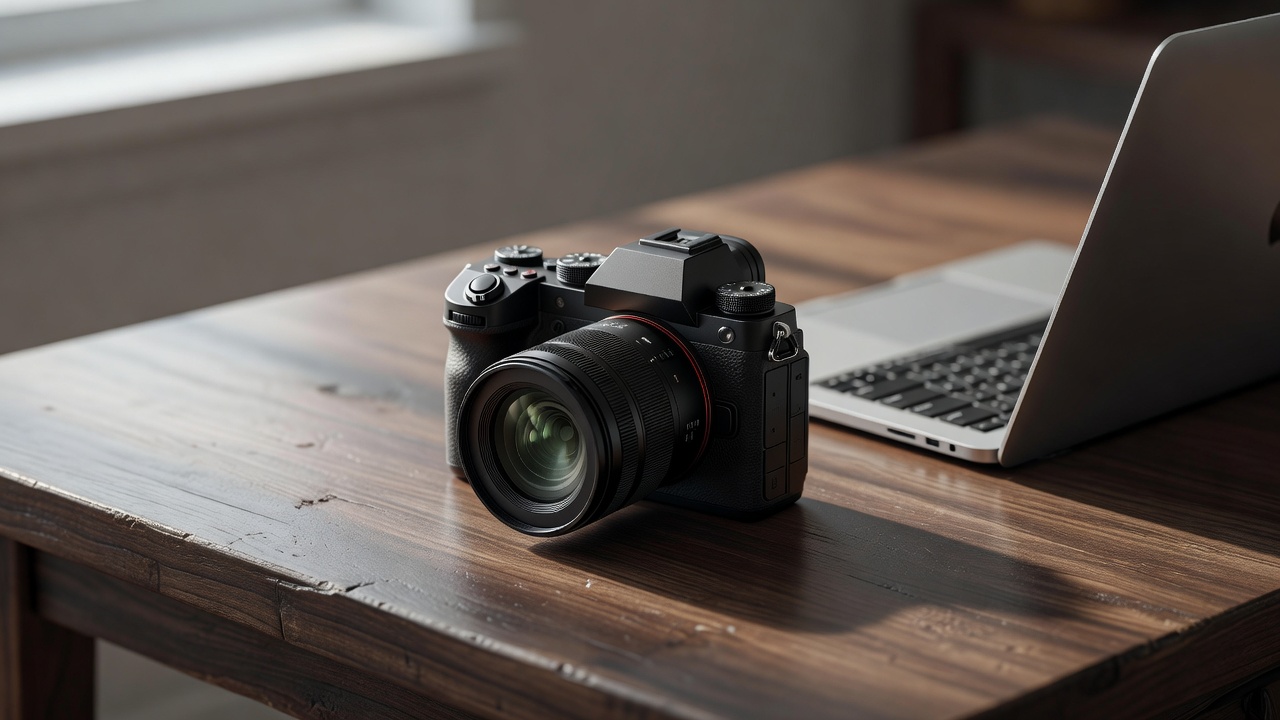
The core of any creator's setup is their camera system. While smartphones continue to bridge the gap with computational photography, dedicated camera bodies paired with interchangeable lenses offer unmatched control over depth of field, dynamic range, and low-light performance. This guide deconstructs the key technical specifications you must evaluate when selecting your imaging ecosystem.
Sensor Architecture
The image sensor is the digital retina of your camera. Its physical size determines its light-gathering capabilities, profoundly impacting noise levels, dynamic range, and depth of field.
Full-Frame Sensors
Measuring roughly 36x24mm (equivalent to 35mm film), full-frame sensors are the gold standard for high-end digital production. The larger surface area allows for larger individual photosites (pixels), which capture more light. This results in superior performance in dim conditions and allows for an incredibly shallow depth of field, creating the coveted "cinematic" background blur.
APS-C and Micro Four Thirds
APS-C sensors introduce a crop factor (usually 1.5x or 1.6x), meaning a 50mm lens behaves like a 75mm lens would on a full-frame body. Micro Four Thirds (MFT) sensors carry a 2x crop factor. While they gather less total light than full-frame sensors, these formats allow for significantly smaller, lighter, and more affordable camera bodies and lenses. For travel vloggers or creators prioritizing mobility and reach over extreme low-light capability, APS-C and MFT are highly efficient formats.
The Optics: Prime vs. Zoom Lenses
A camera body is only as capable as the glass attached to it. The lens resolves the image before it ever hits the sensor, dictating sharpness, contrast, and optical distortion.
- Prime Lenses: These feature a fixed focal length (e.g., 35mm, 50mm). Because their internal optical design is simpler, primes typically offer wider maximum apertures (like f/1.4 or f/1.8). This allows more light into the camera and provides extreme background separation. Primes are often sharper than zooms at equivalent price points.
- Zoom Lenses: These offer variable focal lengths (e.g., 24-70mm). The trade-off for this versatility is usually a narrower maximum aperture (typically f/2.8 on high-end models, or variable f/4-5.6 on kit lenses) and a larger, heavier chassis. For live event coverage or unpredictable shooting environments, zooms are indispensable.
Crucial Video Specifications
If you are acquiring a camera primarily for video production, still photography metrics like continuous burst rate are irrelevant. Instead, you must scrutinize video-specific data.
Bit Depth and Chroma Subsampling
Many entry-level cameras record 8-bit video, capturing 16.7 million colors. While this is fine for immediate delivery, it falls apart during heavy color grading, resulting in "banding" in gradients like skies. Professional creator setups prioritize 10-bit recording, capturing over 1 billion colors, allowing for aggressive color correction.
Coupled with bit depth is chroma subsampling. A 4:2:0 signal discards significant color data to save space, whereas a 4:2:2 signal retains much more chroma detail, essential for clean green-screen keying and precise color manipulation.
Log Profiles
Logarithmic (Log) gamma curves flatly compress the image, preserving maximum detail in the extreme shadows and highlights. The resulting footage looks gray and desaturated out of the camera but contains massive amounts of data. Shooting in Log requires post-production color grading, adding time to your workflow, but it is necessary for maximizing a sensor's dynamic range.
Autofocus Technologies
For solo creators, reliable continuous autofocus is non-negotiable. Modern systems utilize Phase-Detection Autofocus (PDAF), which analyzes phase differences across the sensor to instantly calculate the distance to the subject. This is vastly superior to older Contrast-Detection systems, which "hunt" back and forth to find critical sharpness. When evaluating a camera, look specifically at its subject-tracking algorithms—specifically eye-detection and face-tracking capabilities in video mode.
Summary Recommendations
| Creator Type | Ideal Sensor | Lens Priority | Key Feature |
|---|---|---|---|
| Studio / Desk Vlogger | Full-Frame or APS-C | Fast Prime (24mm or 35mm) | Uninterrupted AC Power, Clean HDMI out |
| Travel / Run-and-Gun | APS-C or MFT | Versatile Zoom (16-55mm eq.) | In-Body Image Stabilization (IBIS) |
| Filmmaker / Colorist | Full-Frame | Cine Primes | 10-bit 4:2:2 internal recording, Log profiles |
Investing in a camera system is a long-term commitment to a specific lens mount ecosystem. Prioritize high-quality glass over frequent camera body upgrades, as optical physics outlast digital sensor iterations.